September 11, 2026

Today’s report was bullish for corn, bearish for soybeans and neutral for wheat relative to pre-report expectations. Today’s report included objective field level data for corn and soybean yield projections. Market attention will focus on developing global conflict and its impact on forward export sales, harvest progress, and yield results coming out of the fields in the coming weeks.
Corn
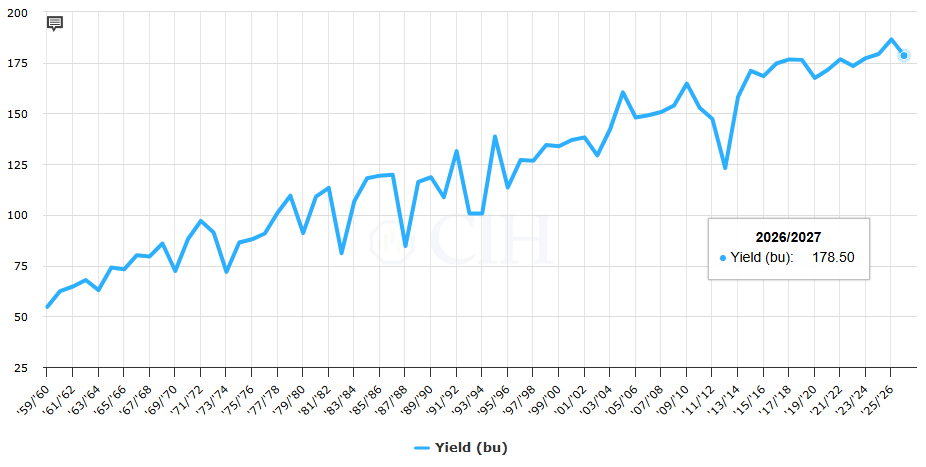
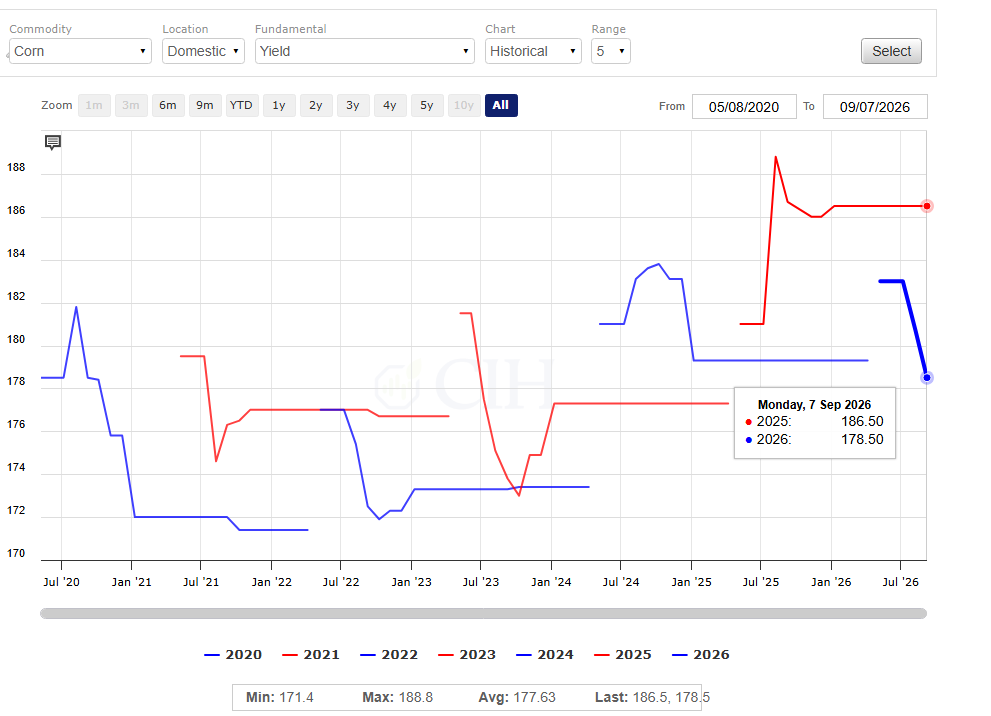
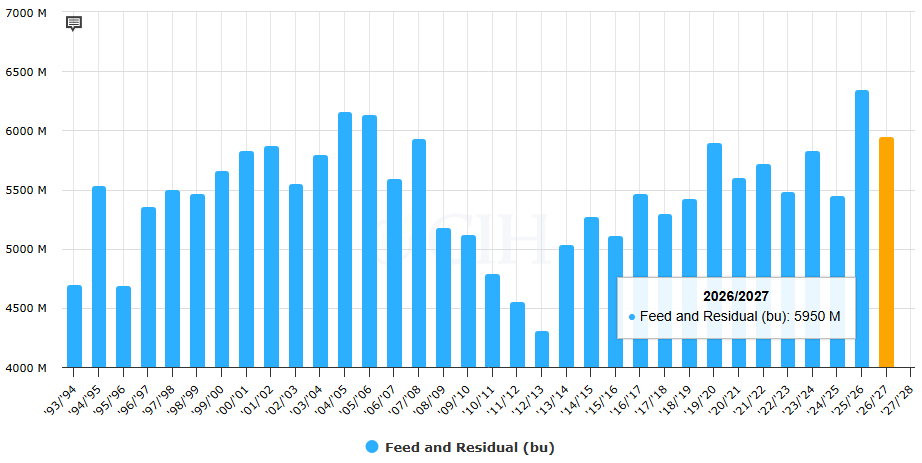
For corn, the domestic 2026/27 balance sheet called for lower supplies, lower domestic use, and a slight reduction in ending stocks. Total supply decreased to 1.77 billion bushels, due to a decrease in beginning stocks, an offset in planted and harvested acres, and a lower corn yield. Beginning stocks for 2026/27 crop year were pegged at 1.922 billion, 230,000 bushes lower than the August’s estimate. Corn yield came in at 178.5 bushels per acre, above analysts’ average pre-report estimate of 178.1 bushels per acre but within the range of estimates (173.2 to 182.9). Feed and Residual use and total domestic supply both decreased by 150 million bushels to 5.950 billion bushels and 1.29 billion bushels, respectively. Exports were left unchanged. This brings ending stocks lower to 1.567. This was slightly above analysts’ average pre-report estimate of 1.533 billion bushels but within range of estimates (1.359 to 1.82 billion range).
Global corn production is forecast 7.93 million tons lowered to 1.290 billion metric tons. Production is forecast lower in the U.S. and Russia. Global ending stocks were cut, reflecting the minor production cuts, at 272.1 million metric tons. This was slightly above analysts’ average pre-report estimate of 271.9 million metric tons but within the range of estimates (269 to 274.6 million range).
Corn yield reduced to 178.5 bushels per acre:
Domestic Feed and Residual use decreased to 5.9 billion bushels, reflecting levels similar to 2019/20:
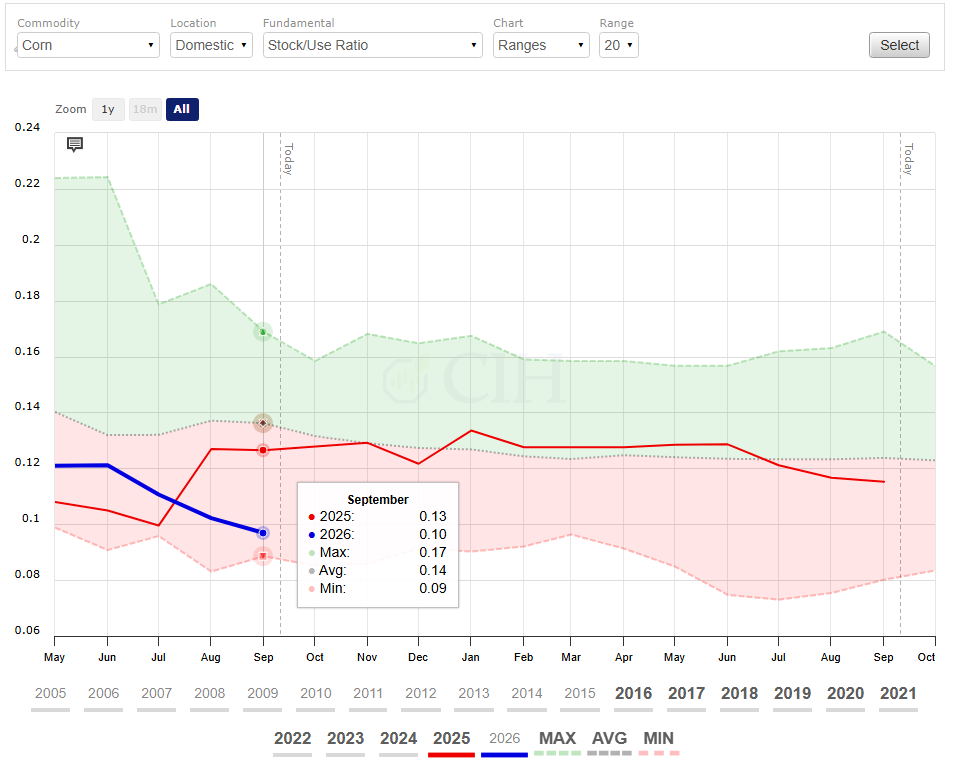
2026/27 stocks to use ratio is becoming more tight relative to the last 20 years:
Soybeans
For soybeans, the domestic 2025/26 balance sheet called for higher production, higher exports, and lower ending stocks. A slight increase to planted, harvested acres and yield pegged production at 4.535 million bushels. This was slightly above analysts’ average pre-report estimate of 4.492 million bushels but within the range of estimates (4.360 to 4.572 billion range). Yield was forecast at 52.8, slightly above analysts’ average pre-report estimate of 52.5 bushels per acre but within the range of estimates (51.5 to 53.3). Exports increased by 25 million bushels to 1.685 billion bushels. As of September 3, the U.S. soybean sales pace to meet USDA’s estimate sits at 45.5% booked, near the 10-year high. Ending stocks were reduced by 10 million bushels to 310 million bushels. This was slightly above analysts’ average pre-report estimate of 289 million bushels but within range of estimates (200 to 333 million range).
Global soybean production was marginally lifted to 442.35 million metric tons. However, ending stocks were pegged lower at 124.02 million metric tons. This was slightly above analysts’ average pre-report estimate of 123.1 million metric tons but within the range of estimates (121.0 to 124.2 million range). This decrease came from a slight uptick in imports to Southeast Asia and an increase to domestic crush in the U.S., E.U., and Southeast Asia.
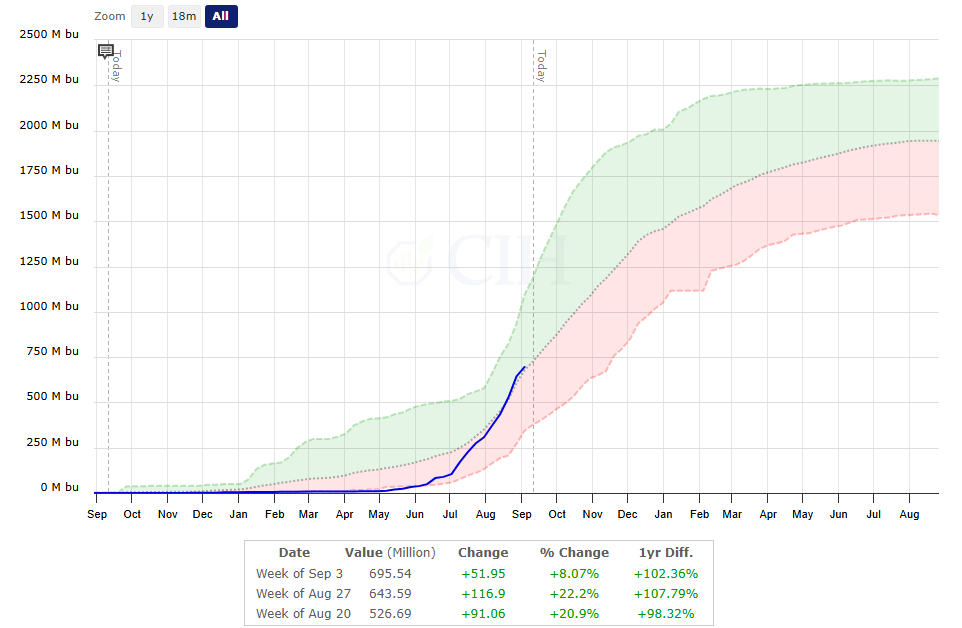
Soybean total commitments for 2026/27 as of September 3:
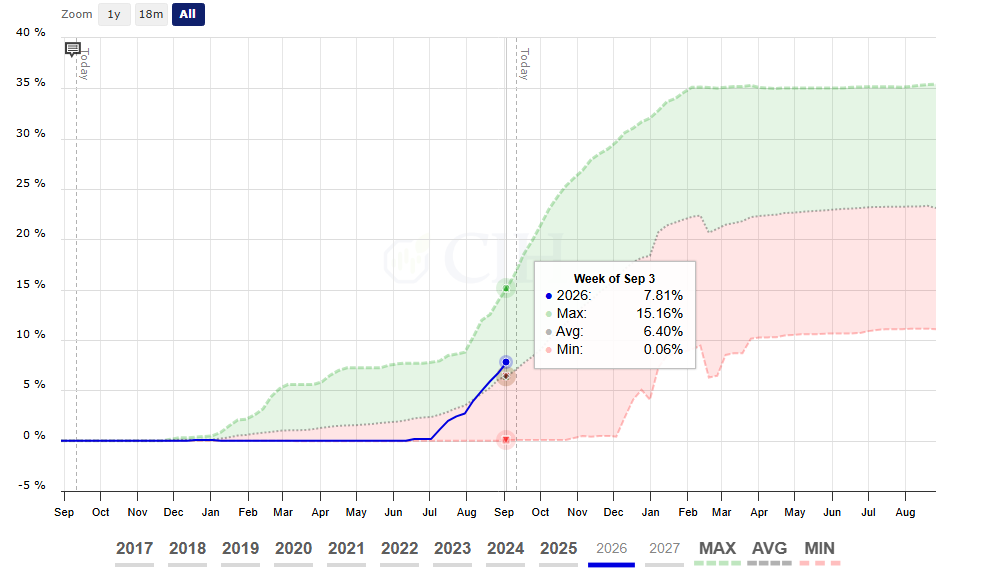
Chinese sales pace for 2026/27 not including recently announced flash sales:
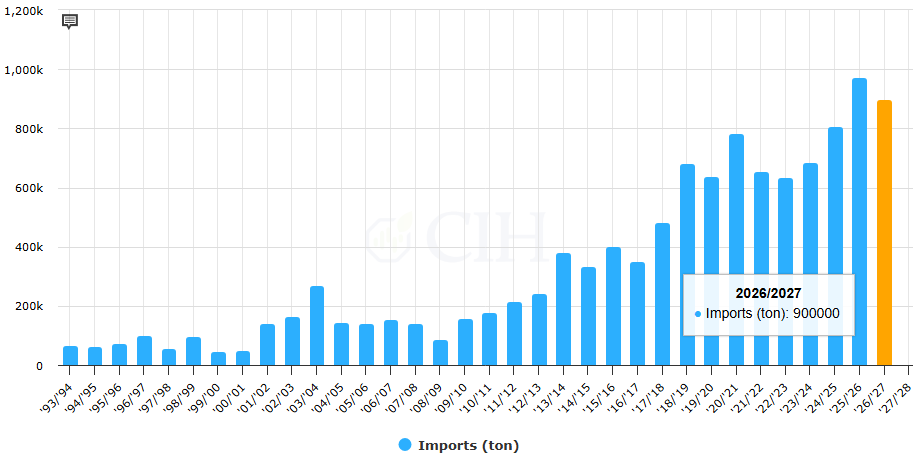
Soybean meal imports increased by 25 million tons to 900 million tons:
Wheat
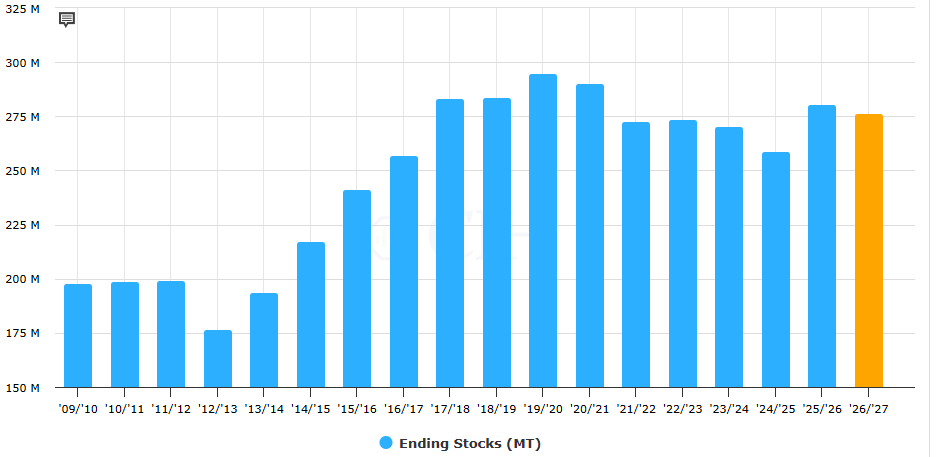
No changes were made to the domestic 2026/27 balance sheet for wheat. Globally, the balance sheet calls for higher supplies, marginally reduced exports, and higher ending stocks. Production increased by 1.5 million metric tons in Argentina, 3 million metric tons in Australia, 1 million metric tons in Canada and 600,000 tons in Ukraine. These increases offset the reduction in E.U. And Russian production. Exports were decreased by 1 million metric tons due to a reduction in Ukraine and Russian exports, slightly offset by an increase in Australia and Canadian exports. Overall, ending stocks were 3 million metric tons higher at 276 million metric tons. This was above analysts’ average pre-report estimate of 273.2 million metric tons and at the top of the range of estimates (271.3 to 276.1 million).
Global ending stocks increased from last month: