
August 31, 2026

The forward margin outlook for hog producers has deteriorated noticeably in recent weeks.
The question is not whether hog prices can rally from here or whether corn can move lower. The more useful question is what has happened to the margin available to producers and what would need to change for that margin to improve.
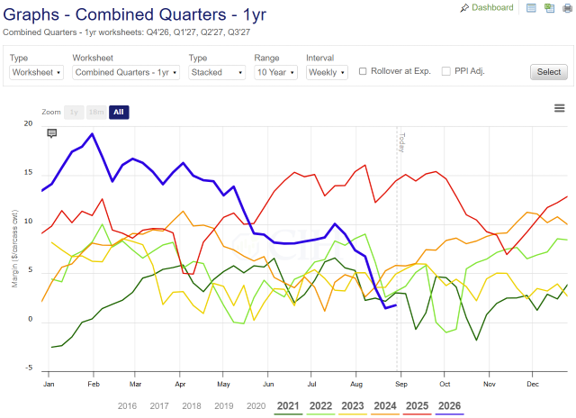
Since mid-April, the projected profit margin over a rolling four-quarter timeframe has fallen by approximately $33 per head. The decline can be traced to several developments on both sides of the margin equation: higher feed costs as corn supplies tighten and lower expected hog revenue as heavier carcass weights, abundant domestic protein supplies and a more competitive international pork market weigh on prices.
Figure 1. Rolling 4 Quarters Margin Chart
The feed cost side of the equation has become less supportive. USDA’s August WASDE report tightened the 2026/27 corn balance sheet, with stronger demand more than offsetting a modest increase in production. Ending stocks are projected 15 percent below last year, while the stocks-to-use ratio is expected to fall toward 10 percent. Private crop tour results over the past several weeks have also largely come in below USDA’s current yield estimate of 180.7 bushels per acre.
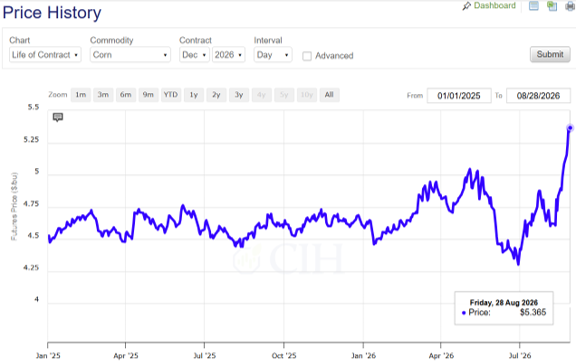
The market has responded accordingly. December corn futures have rallied more than $1 per bushel from their late-June lows. For our demonstration operation, a 10-cent-per-bushel increase in corn reduces projected profit margin by approximately $1 per head.
Figure 2. December 2026 Corn Futures
The pork side of the equation has also failed to provide the seasonal lift many producers were expecting. Pork production remains substantial, while heavier carcass weights are putting additional pounds of pork on the market without a significant increase in the breeding herd. That additional supply has made it more difficult for the cutout and hog prices to generate the type of summer rally that would improve forward margins.
Domestic protein competition adds another layer to the story. USDA projects 2026 per-capita availability of beef, pork, broilers and turkey at 231.8 pounds, up from 2025 and the highest level in the current forecast series. Broiler availability is particularly notable, with per-capita availability projected at a record 106.8 pounds.
Chicken has become the most abundant animal protein available to U.S. consumers, and the combination of increased production and relatively affordable retail prices gives consumers another attractive option.
Figure 3. Broiler Per Capita Domestic Disappearance
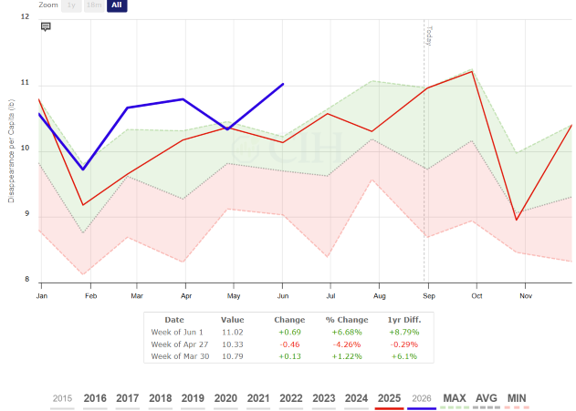
Source: USDA AMS, FAS, NASS, and CIH Analysis
At the other end of the spectrum, beef prices have reached record levels, yet consumers have continued to demonstrate a willingness to pay for beef. That creates an unusual dynamic for pork. Higher beef prices should create an opportunity for substitution toward less-expensive pork and chicken, but strong beef demand means consumers are still allocating a significant portion of the protein dollar to beef.
The result is that pork is competing against both an increasingly abundant supply of chicken and a remarkably resilient beef market. This does not necessarily mean domestic pork demand is weak. Rather, it means the domestic protein market is highly competitive, and pork does not operate in isolation from changes in the other major animal proteins.
Figure 4. Beef Per Capita Domestic Disappearance
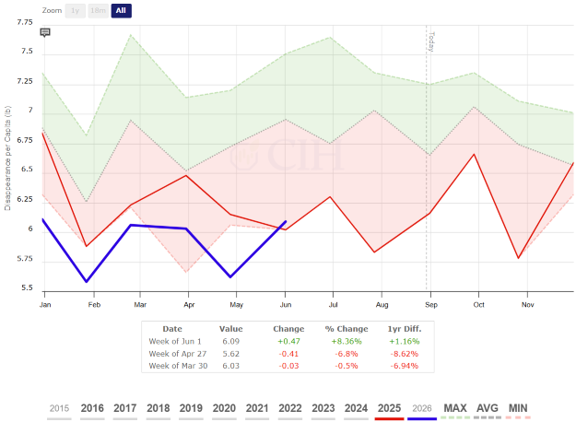
Source: USDA AMS, FAS, NASS, and CIH Analysis
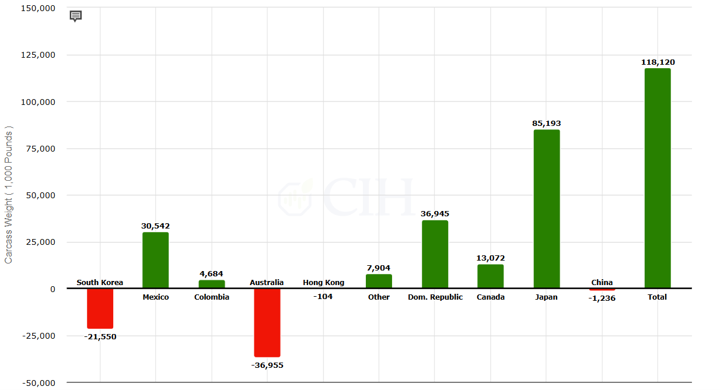
Exports provide a more complicated story. On a carcass-weight-equivalent basis, pork exports are 3.4 percent higher year to date. June exports, the most recent data available, were 2 percent below year-ago levels. It was the first month this year in which shipments fell below the same period of the previous year.
There are still plenty of positives in the export picture. Central America and the Dominican Republic are running at record or near-record paces, while Mexico remains a critical destination for U.S. pork. Continued export growth is particularly important because the industry needs to move those additional pounds offshore to prevent even more pressure from building in the domestic market.
Figure 5. Year-to-Date Exports by Destination
Source: USDA ERS
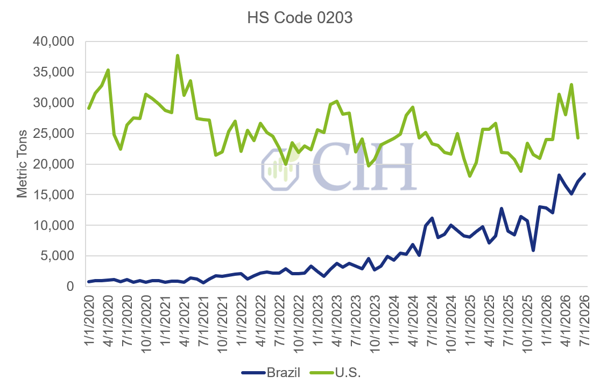
Japan is a market we have received many questions about from clients. While first-half exports to what has traditionally been our largest market by value were strong, headwinds remain.
Japan’s weak yen has made imported pork more expensive for Japanese buyers, while Brazil has become an increasingly important competitor. USDA’s Foreign Agricultural Service reports that Brazilian pork imports into Japan have increased significantly, while U.S. pork imports have faced pressure from the combination of relatively high U.S. prices and the weak yen.
Figure 6. Monthly Brazilian, U.S. Pork Exports to Japan
Source: U.S. Census Bureau, Comex Stat
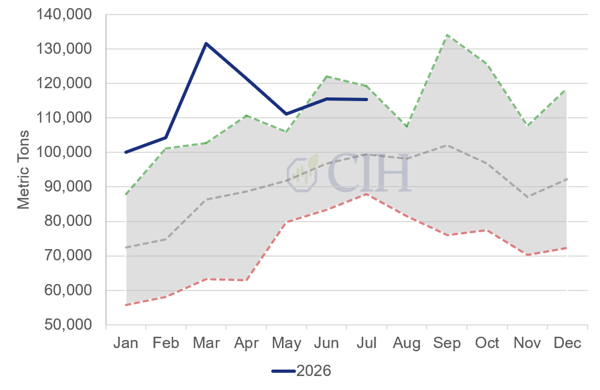
Brazil’s growing presence matters beyond Japan. Brazilian pork exports have reached record levels so far this year, increasing the amount of competitively priced pork available to buyers around the world. Brazilian pork exports are 7.5 percent higher year to date. That does not mean Brazil will completely replace the United States in any particular market. It does mean, however, that U.S. exporters face more competition for the incremental global demand needed to support higher pork values.
Figure 7. Monthly Brazilian Pork Exports, 2020-2026
Source: Comex Stat
The margin outlook has changed significantly since our last column. Many of our clients protected feed in conjunction with hogs when margins were more attractive, even with a favorable crop outlook in their area. Markets can change quickly, and unforeseen events anywhere in the world can alter the outlook. Those producers are now better positioned to weather the deterioration, having established hedges when margins were more favorable and evaluating adjustments as conditions evolve.
For producers looking to add coverage, flexible tools such as options, Livestock Risk Protection and Livestock Gross Margin insurance can provide additional ways to manage risk. These strategies can help protect against adverse price movements while retaining some opportunity to participate if margins improve.
Markets will continue to move, and margins will change with them. Producers who understand the margin available today and have a plan for protecting it are better positioned to navigate that uncertainty. The goal is not to predict the market perfectly, but to strike the right balance between protecting an acceptable margin and retaining the opportunity for improvement. Contact us to learn more about developing a risk-management strategy that helps you take greater control of your bottom line.